

Three building blocks
Every modern cold mix is a balance between three components: the bitumen binder, the aggregate, and the additives that turn them into a workable, durable material at ambient temperature.
Polymer-modified binders
Plain bitumen softens in heat and cracks in cold. Cold mix uses SBS, SBR or polyurethane polymers blended into the bitumen to extend its service temperature window and add elastic recovery. The binder flexes with thermal movement and traffic loads instead of brittle failure.
Bitumen emulsion or cutback
To stay workable cold, the binder is either emulsified — suspended in water with surfactants — or cut back with a light solvent. Emulsions break and release water when compacted, leaving the bitumen behind to bond the aggregate. Cutbacks evaporate the solvent over time.
Aggregate gradation
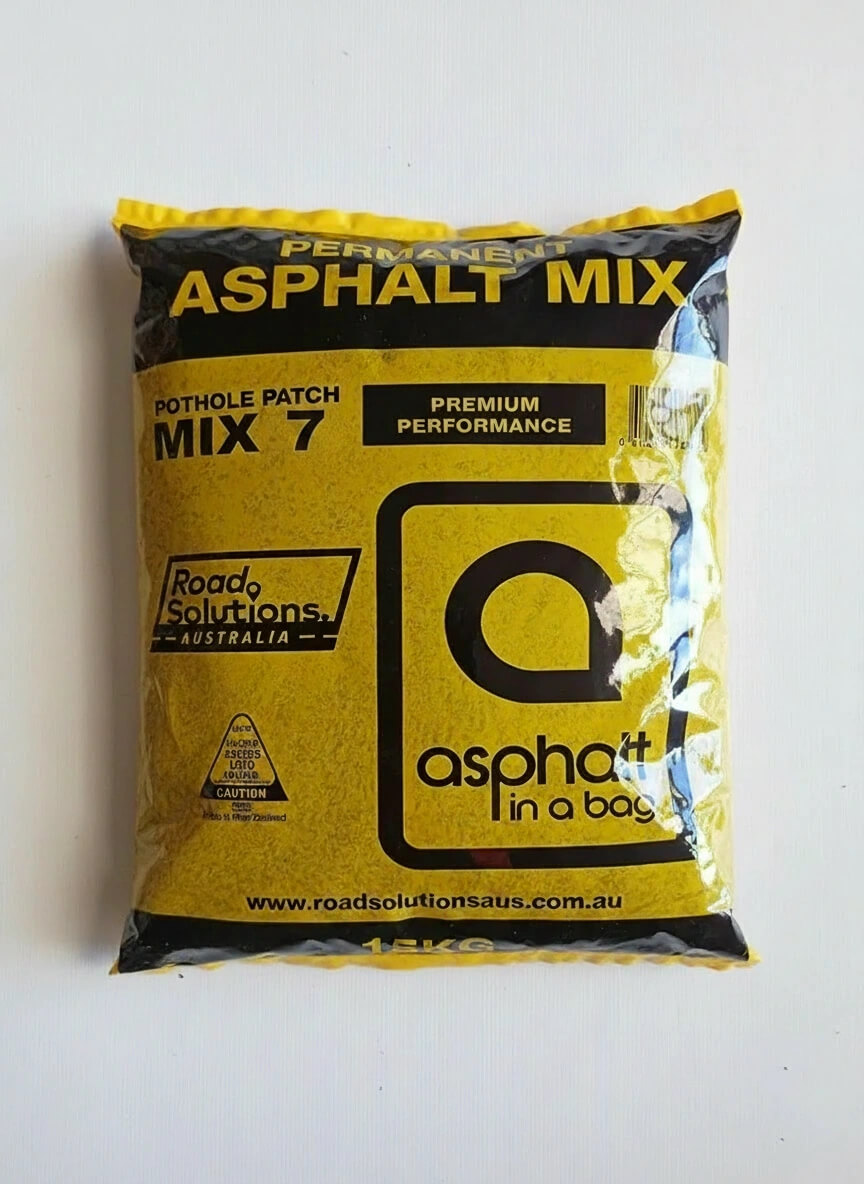
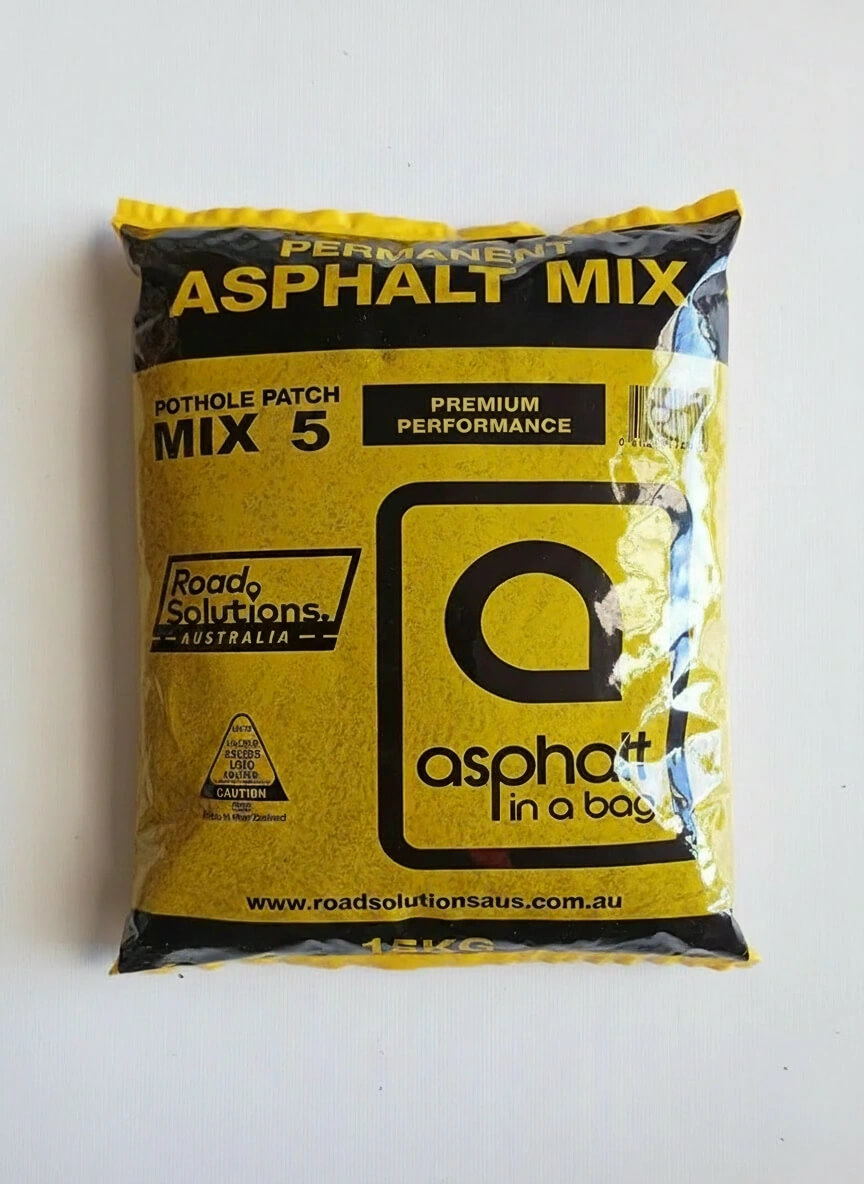
The aggregate skeleton carries the load. Cold mix uses dense-graded, washed aggregate with a controlled fine fraction so the mix locks together when compacted. Different gauges (5, 7, 10, 14) refer to the maximum aggregate size in millimetres.
Why it cures
Once compacted, the mix densifies and the binder coats are forced into intimate contact. Residual water or solvent leaves; the polymer-modified bitumen binds the aggregate; and traffic loading completes the densification. The patch grows stronger over the first weeks of service.
Why old cold mix had a bad reputation
Early cutback mixes used heavy solvents that never fully evaporated, leaving a soft, ravelling patch. Modern emulsion and polymer technology has eliminated that failure mode.
Products mentioned
Get the materials
Frequently asked questions
What polymer is used in cold mix asphalt?
SBS (styrene-butadiene-styrene), SBR (styrene-butadiene rubber) or polyurethane modifiers are common. Each adds elastic recovery and a wider service temperature window.
Does cold mix asphalt contain water?
Emulsion-based cold mix contains water that releases during compaction. Cutback-based cold mix contains a small solvent fraction instead.
Why is the aggregate washed?
Clay and dust on aggregate surfaces prevent the binder from bonding. Washing produces a clean stone surface and a stronger, more durable mix.


