

Inside the bag
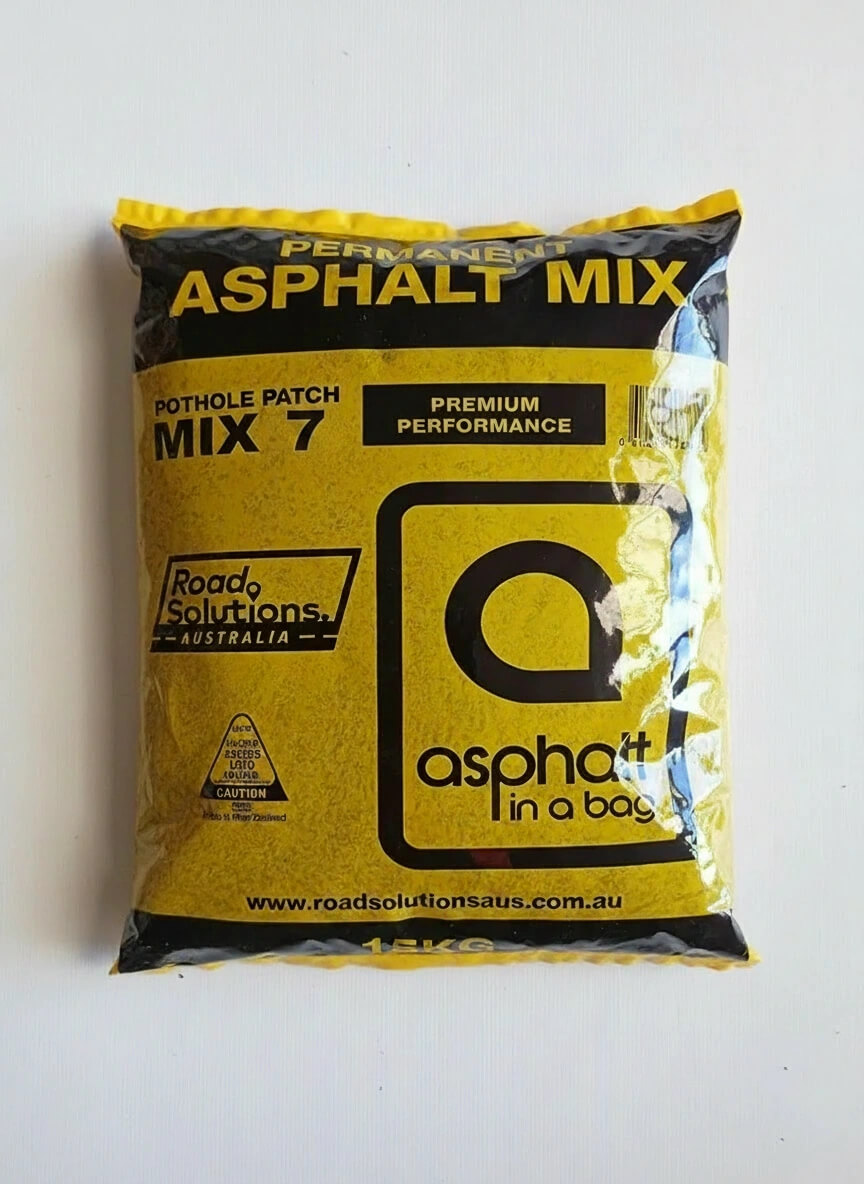
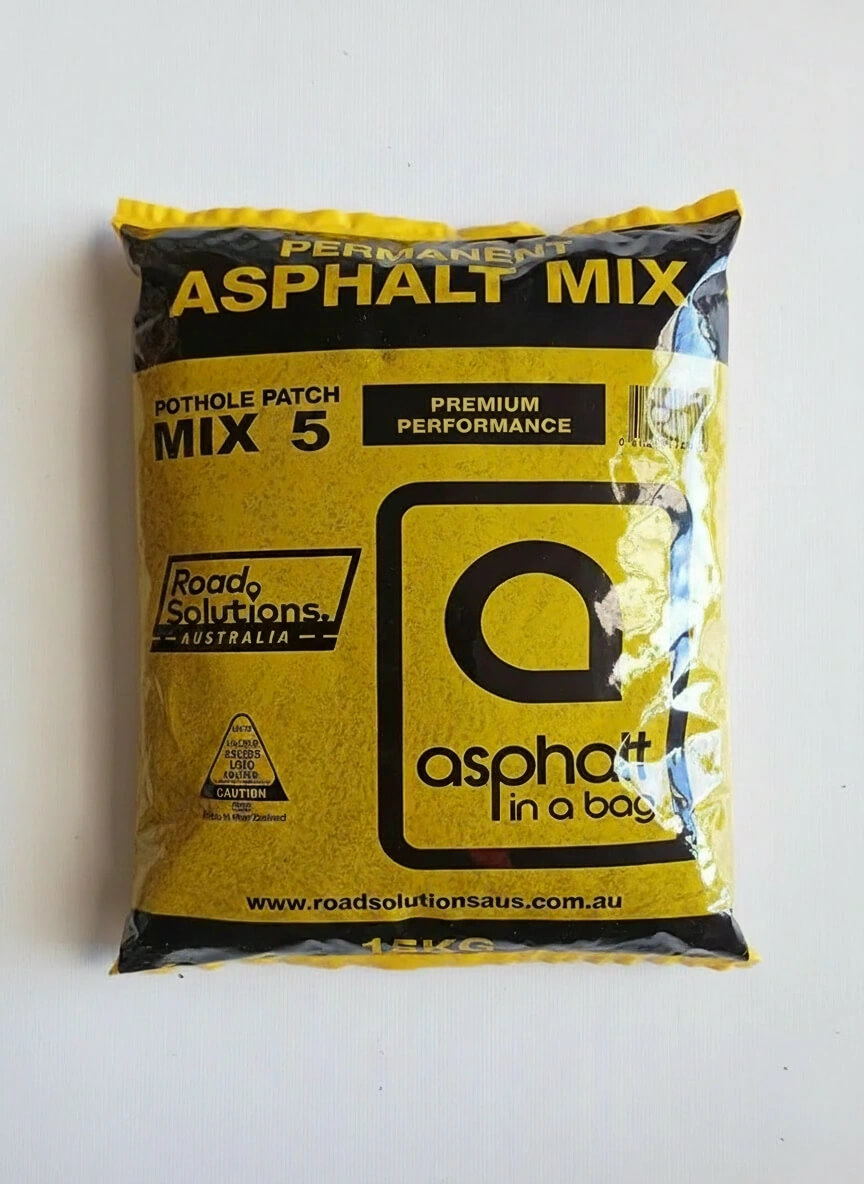
Each bag contains two things: graded aggregate (washed crushed rock at a specific size distribution) and polymer-modified bitumen binder, emulsified in water. The emulsion keeps the bitumen workable in the bag for up to 12 months.
Step 1 — Workable mix
When the bag is opened, the mix pours easily and conforms to any shape of defect. The emulsion holds the bitumen apart from itself while the surfactant film keeps each droplet stable.
Step 2 — Compaction
Compaction physically squeezes the aggregate together and breaks the emulsion. The surfactant film opens, the bitumen droplets coalesce, and water is forced out toward the surface. The aggregate locks into mechanical interlock.
Step 3 — Curing
Over the first hours and days, residual water evaporates. The polymer-modified bitumen film hardens between aggregate particles. Traffic continues to densify the patch, increasing strength and stability.
Why it's permanent
Three things give Asphalt in a Bag its durability: the polymer modifier (elastic recovery), the washed graded aggregate (mechanical interlock), and the controlled emulsion break (continuous bitumen film). All three working together is what separates a permanent repair from a temporary one.
Products mentioned
Get the materials
Frequently asked questions
Does the bag need to be sealed?
Yes — the seal preserves the emulsion. An opened bag should be used within a few weeks.
Is the patch fully strong on day one?
It is fully trafficable on day one. Strength continues to develop over the following weeks as the binder fully cures and traffic densifies the mix.
Why does the surface look slightly wet at first?
That's the emulsion water releasing during and after compaction. It evaporates within a day.


