

Why potholes form
A pothole is the end stage of a water intrusion problem. Water entered a crack, weakened the base, traffic loading pumped fines out, and the unsupported surface collapsed. Fixing the hole solves the symptom — sealing remaining cracks prevents the next one.
The right product
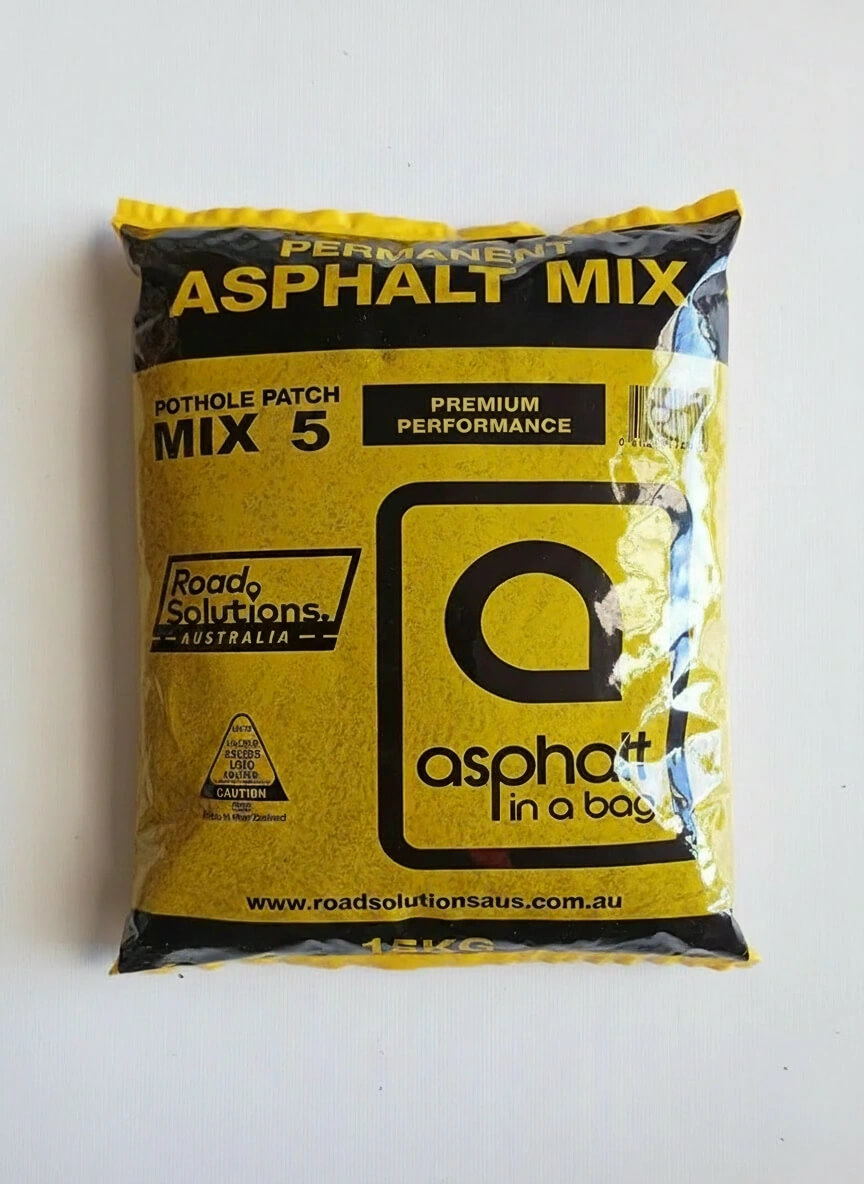
- Shallow (≤ 30 mm): 5 Gauge cold mix for a tight cosmetic finish
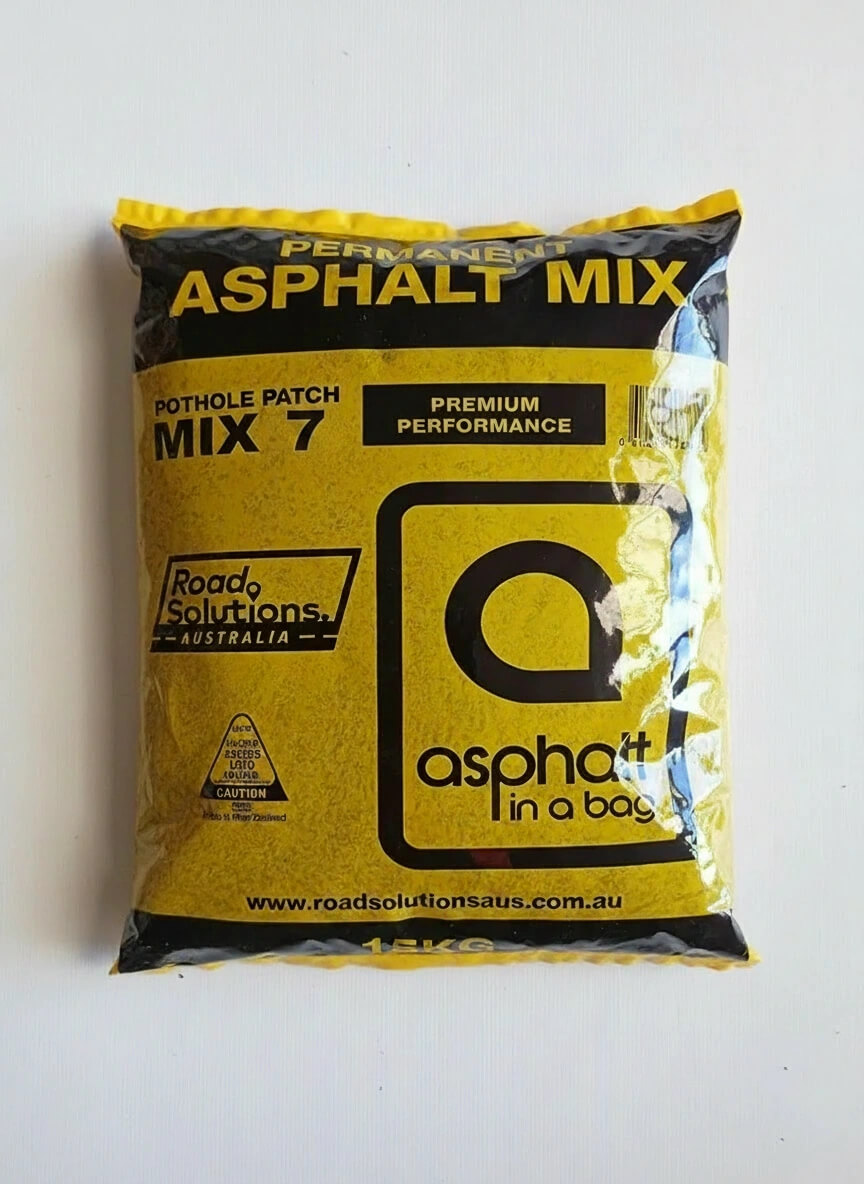
- Standard (30–60 mm): 7 Gauge cold mix
- Deep (60 mm+): 10 or 14 Gauge as base, finish with 7 Gauge
Step-by-step
- Sweep the hole clean and remove standing water.
- Use a shovel to square the edges — no overhangs or feathered edges.
- Pour the cold mix in, slightly overfilling.
- Compact from the outside in. A hand tamper works for small holes; drive over with a vehicle for larger ones.
- Sweep loose fines off the surface. Drive on it.
Lifts for deep holes
If the pothole is deeper than about 50 mm, place the mix in two or three layers and compact each one before adding the next. A single deep fill cannot compact in the middle, and the patch will deform under load.
Don't forget
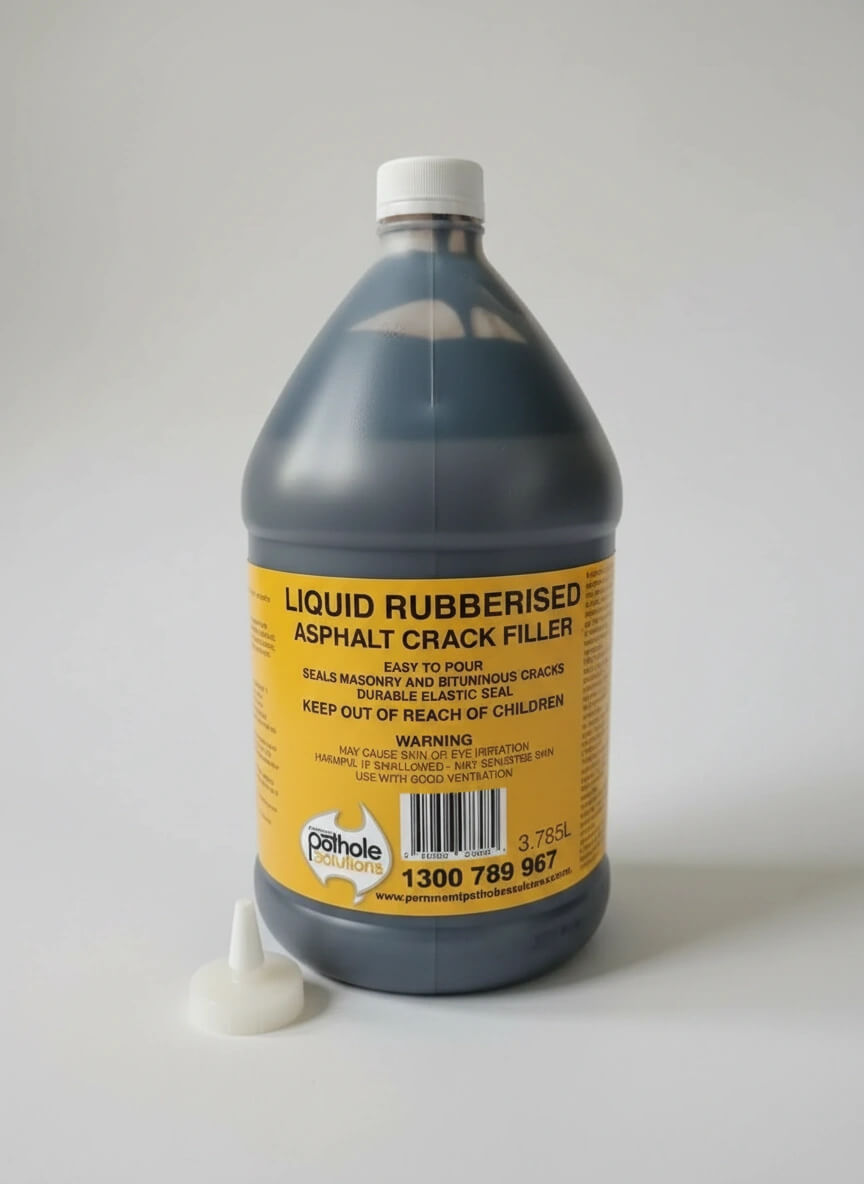
Walk the rest of the driveway while you have the gear out. Seal any cracks within a metre of the patch — that's where the next pothole will form.
Products mentioned
Get the materials
Frequently asked questions
Can I use cold mix on a wet pothole?
Yes. Remove standing water, but the mix bonds to a damp surface — that's by design.
How much does a residential pothole repair cost?
Materials only — a $25–$45 bag of cold mix usually covers a typical driveway pothole.
Will the patch be a different colour?
Initially yes — it cures to a deep matt black. It weathers toward the surrounding colour over a few months.


