

When patching is the right answer
Patching makes sense when damage is localised — potholes, edge breaks, frost heave or a small area of cracking surrounding a defect. If more than ~25% of the driveway is affected, plan a full resurface instead.
Choose the right product
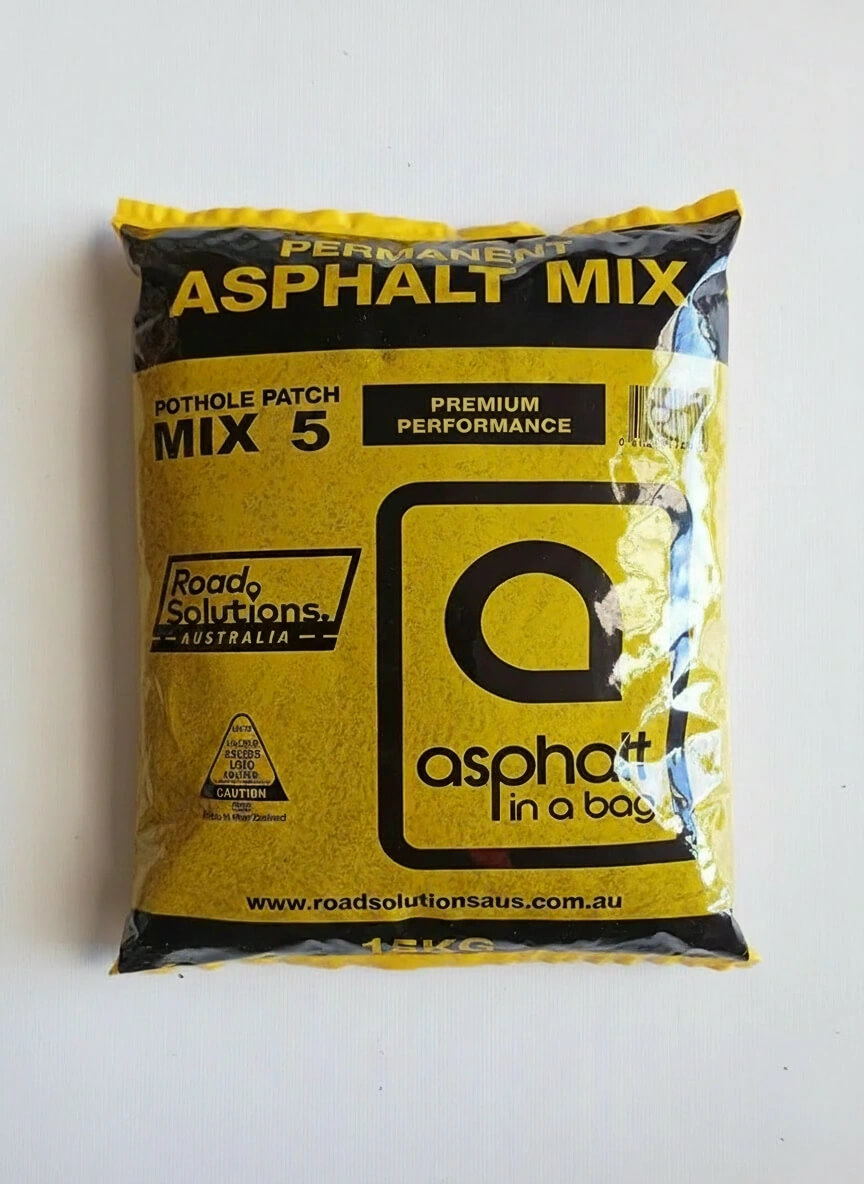
- 5 Gauge — tight cosmetic patches, shallow defects (≤ 30 mm)
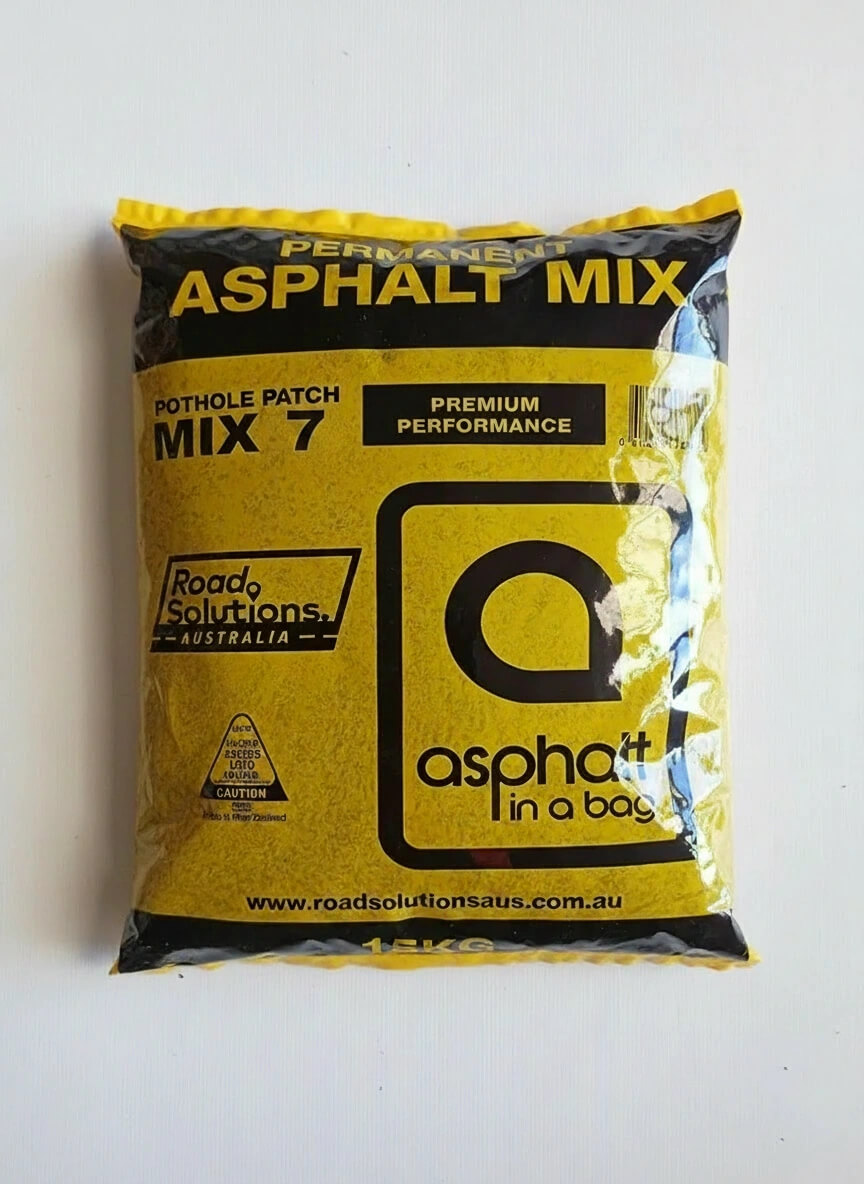
- 7 Gauge — most general driveway potholes (30–60 mm)
- 10 Gauge — large or deep potholes (60–100 mm)
- 14 Gauge — base course for very deep failures (compact in lifts)
The patching workflow
- Sweep the defect clean and remove standing water.
- Square the edges with a shovel — vertical sides bond best.
- Pour the cold mix in, overfilling by about 15%.
- Compact from the outside in with a tamper or drive over with a vehicle wheel.
- Sweep loose fines off the surface. Drive on it the same day.
Finishing tips
Crown the patch slightly above the surrounding surface so water sheds off instead of pooling. A small sprinkle of dry sand on the finished patch reduces tyre pickup in the first 24 hours.
How long will it last?
A properly placed cold mix patch on a domestic driveway typically lasts the remaining service life of the driveway itself — 10 years or more. Failure usually traces back to skipped prep rather than the product.
Products mentioned
Get the materials
Frequently asked questions
Can I patch in the rain?
Yes. Cold mix bonds in wet conditions — just remove standing water from the hole before placing the mix.
Do I need to seal the patch afterwards?
No, but a sealcoat applied across the whole driveway every 3–5 years extends overall driveway life.
How much does one bag cover?
A 20 kg bag covers roughly 0.2 m² at 50 mm depth. A typical pothole takes half to one bag.


