

Why crack repair matters first
Cracks let water into the pavement structure. Once the base layer is saturated, every traffic load pumps water out and fines with it, hollowing the support and creating potholes. Crack repair is preventive maintenance with extraordinary return on investment.
Method by crack width
| Crack width | Method | Notes |
|---|---|---|
| Hairline (≤ 3 mm) | Sealcoat across area | Single cracks too narrow to fill — protect with surface seal |
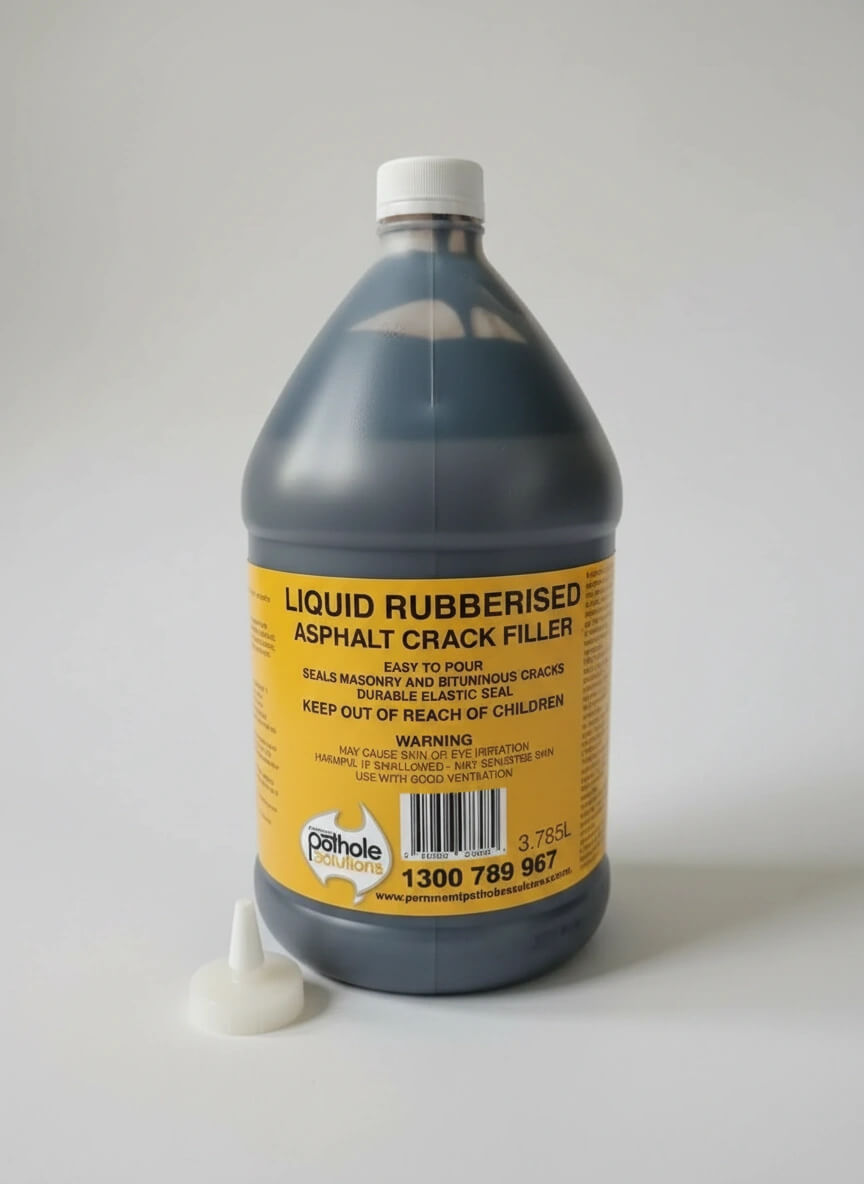
| Small (3–10 mm) | Cold-pour rubberised filler | Quick, low-equipment, ideal for driveways and car parks |
| Medium (10–25 mm) | Rubberised filler, multiple passes | Clean and fill, then top up after first cure |
| Wide working (25 mm+) | Rout and seal | Saw a clean reservoir, then hot or cold rubberised sealant |
| Block / alligator | Patch and resurface | Cracking is now a base-failure symptom — repair the base |
Cold-pour rubberised filler
Cold-pour products are urethane-fortified or polymer-modified bitumen sealants supplied ready to use. They flex with the pavement, bond without primer, and cure in 30–60 minutes to light foot traffic.
Hot-applied sealant
Hot-pour rubberised sealant is melted in a kettle and applied with a wand. It bonds well and stays flexible — but the equipment and crew cost only pays back on larger jobs.
Rout and seal
For wide working cracks, sawing a uniform reservoir before sealing gives the sealant the depth and shape factor it needs to handle thermal movement without splitting open again.
Products mentioned
Get the materials
Frequently asked questions
How wide can a cold-pour filler handle?
Up to about 25 mm in two or three passes. Beyond that, rout the crack into a clean reservoir or move to a hot-applied sealant.
Do I need to dry the crack first?
Yes. Bitumen sealants will not bond to standing water. Compressor or wire brush, then a few minutes of dry weather, is enough.
Can I drive over a freshly sealed crack?
Wait 30–60 minutes for cold-pour products, then dust with sand if you need to drive on it immediately to prevent tyre pickup.


